FELIX RUCKERT
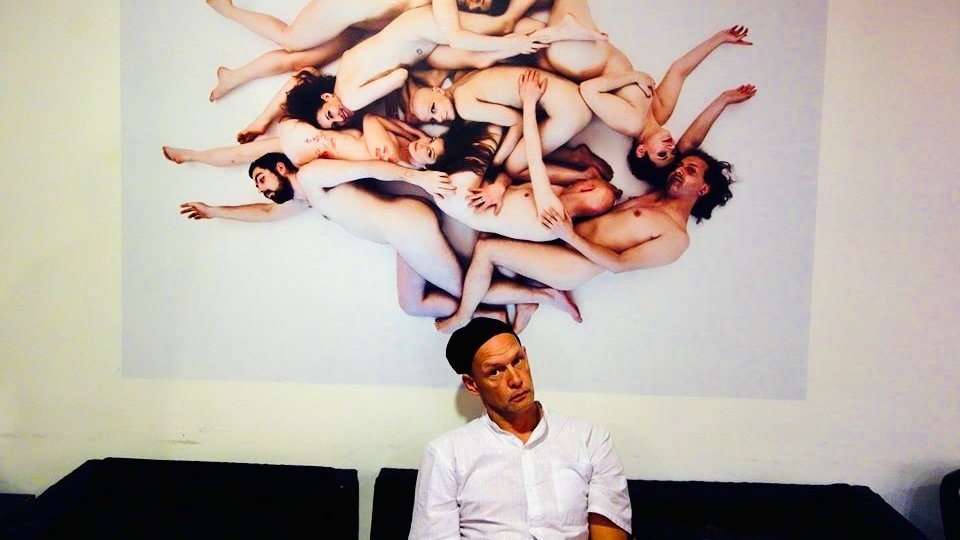
After a long career as an internationally renowned dancer and choreographer, Felix Ruckert expanded his skills when he discovered shibari, or kinbaku—Japanese rope bondage—in 1999 while on tour in Japan. Initially self-taught, copying techniques only from photos in Japanese rope bondage magazines, he soon had the opportunity to study in Berlin under Hagen, Matthias T.J. Grimme, Midori, Shadow, and Osada Steve, who became his first teachers between 2002 and 2006.
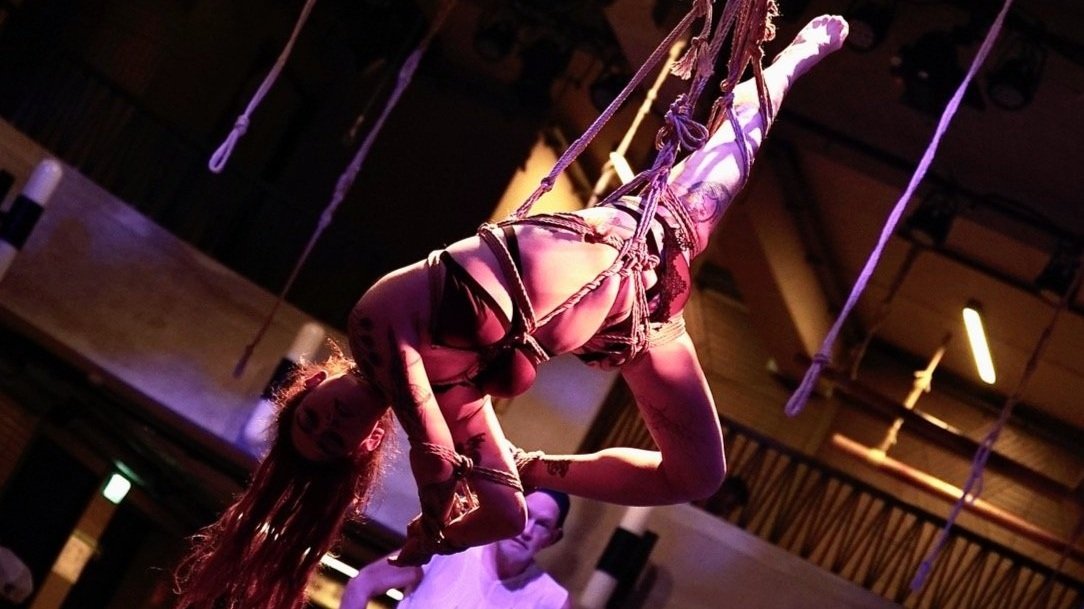
When he opened the venue schwelle7 in 2007, it quickly became a major hub for the international shibari community. For nine years, Felix regularly invited masters from Japan to schwelle7, which gave him the opportunity to expand his knowledge and learn from some of the most influential Japanese masters: Arisue Go, Nawashi Kanna, Hajime Kinoko, Akira Naka, Otonaya Otonawa, and Ren Yagami, among others. Through schwelle7’s extensive and highly popular shibari program, Felix Ruckert played a key role in popularizing the practice in Berlin and throughout Europe. The venue and style of schwelle7 became a model for many rope bondage dojos across the continent. Coming from a background in dance and theater, Felix Ruckert also created dozens of rope bondage performances and collaborated with artists such as Dasniya Sommer, Caritia, Gorgone, Nicolas Yoroi, Anna Noctuelle, Pilar LaOtra, Tifereth, Sophia Rose, Saara Rei, and many others. He also created several performances in a theatrical context that incorporated elements of Japanese rope bondage: *STILLEN* (2000), *DIE FARM* (2006), *DRYADE – A DARK FAIRY* (2011), and *ZERO GRAVITY ZONE* (2012).
Felix Ruckert currently curates and organizesEURIX—The European Rigger & Model Exchange—twice a year in Berlin, the most popular international gathering for rope artists dedicated to the development of kinbaku as an art form. For EURIX, Felix has written the“Guidelines for Rope Bondage Presenters” as well as the“EURIX Guidelines for Negotiation and Establishing Consent.” At EURIX, he regularly presents short rope bondage performances based on three conceptual rules: the use of innovative techniques, the definition of narrative and subtext, and the application of tools for spontaneous composition.

Felix’s private and public bondage sessions are unconventional and do not follow any particular style. He draws on a wide variety of techniques and schools; his bondage adapts to every partner and every situation, and he composes with the body, rope, time, and space—often in unpredictable ways.
On the technical side, he tries to invent new patterns and ties and is particularly interested in creative and quick suspensions, often using a minimal amount of rope, whether on bamboo or a ring. He also enjoys floor work and likes to incorporate other forms of sensual practices, especially impact play and knives, all the way to breath control and mindfuck.
On stage, he strives to create powerful theatrical experiences, generate meaning, and provoke reactions and thoughts. He also enjoys reflecting on and exploring the social and political implications that the practice of rope bondage might have. He sees the practice as a model for a mutually beneficial, deeply human collaboration, as an exercise in consensus, and as a way to reinterpret power dynamics and deconstruct gender stereotypes.