

Video interview by the Goethe-Institut China with Beata on “Pornography & Society”
What materials can help us get to the bottom of the elusive nature of sexuality? How are our bodies and their desires entangled in power dynamics—and how do we deal with that? Alone or with others? Publicly or privately? By emphasizing the beautiful or the difficult aspects? Through play or seriousness? By being sweet or angry? Do we even have to decide—and why is it always so much about deciding “This is good and this is bad!” when it comes to sexuality? For the issue of the online magazine “yì” focusing on “Pornography and Society,” Silvan Hagenbrock, online editor at the Goethe-Institut China, spoke with Beata about her work and vision.
Watch the video here.

The Inner Playground. An audio journey by Tim Holland
All these workshops, sessions, and messy play areas are places we visit because we want to experience ourselves differently, encounter something different, and become something different. Transformation, change, becoming a stranger, becoming close, metamorphoses, turning the inner out, the outer in, being turned inside out, being lifted elsewhere, going through the ceiling and deep into the earth, letting ourselves be amazed, astonished, surprised, and moved by the unimagined and the unknown—letting it all out, everything out, inventing the unheard-of, sensing it, drawing near, circling around, trying, temptation. But all those workshops, sessions, and games aren’t available to us right now—break, lockdown, retreat, distance. So for anyone who still wants to experience physical sensations that make you go “Huiuiuiuiuiui!”, I recommend this wonderful guide to “becoming an alien” by my dear and talented friend Tim—it’ll transform you completely… To do this, find a quiet spot with headphones, press play, and follow the instructions…
Daniela Reina Téllez on the Power of Workshops and Circles
Daniela works “in the fields of experimental art and somatic work” and explores “the political, ecological, and activist potential of workshops and body practices as artistic practices.” What a joy and pleasure it was to meet this wonderful person at the Touch & Play Festival! I was moved by her social media post, in which she shared the transcript of her talk below, with the words: “(…) Fellow and dear facilitators and circle-holders: Thank you for the work you do ❤ Let’s keep gatherings and circles alive, especially now—whether virtual, outdoors, at a distance, or with safe(r) measures… Let’s keep them—and us—alive!” And thank YOU for the work you do, Daniela! I hope that reading about her artistic journey and her tribute to workshops, gatherings, sessions, and circles will reach and enrich many people. Because course work and bodywork are immensely important—yet, strangely enough, are sometimes dismissed—even though they rank among the most meaningful experiences and creations I’ve had the privilege of experiencing and shaping myself in this life. So—here we go…
Sex /vs./&/?/ Violence. An Attempt at Conceptual Delimitation Through Distinction
“What is sex?” we asked during a discussion session at Xplore. Anna Natt and Matís invited us to break down this impossible question into more specific parts: “How do you use the word ‘sex’?”, “How do you have sex?”, and “How do you know you’ve had sex?” One participant explained that he was attending this discussion group because he thought it was a good idea to hear, at a sex-positive event, what “sex” actually means to the participants here. Community = shared language. Makes sense. But after the first round, it becomes clear that “sex” means something different to everyone. And yet it would be too easy to stop at private language and pseudo-enlightened platitudes like “Everyone sees it differently, everyone is right, no one is right. Namaste.” Surely we can find good arguments for common ground to agree on convincing definitions. The answers to the questions vary between references to specific…
Testimonial for our "Trial & Eros" workshop by Claire
This time, we’d like to share with you a longer reflection by a participant in one of our workshops. During the wonderful week-long gathering “Touch & Play” in southern Germany, Beata facilitated an intensive session she called “Trial & Eros – Engineering Fantasies and Navigating Playspaces,” which was all about figuring out what erotic fantasies you have, how to make them come true, how to harness the group and the atmosphere to actually make it happen, how to reflect with others on how it went, and then doing it again—but better! Essentially, it aimed to motivate participants not just to drift aimlessly through a playspace like a jellyfish and see where they end up (chances are it’ll just be a cuddle puddle…), but rather to approach it like an architect or a group of savvy researchers who want to harvest the best elements and proactively build their dreams.
And here's what Claire experienced...

“Sex & Food” – Beata in a podcast conversation with Nicole Siller
It's about what bondage has to do with birth and death, why even licking an arm can be sex, and how frustration can be a great foundation for more pleasure. Click here for the podcast.

Intimate Interviews, Part I – The Connection Between Art and Pleasure, and a Workshop Request Show
Last year, we had the pleasure of interviewing wonderful and talented people about everything that also occupies us in our work. To start things off, we treated our interviewees to a bodywork session of their choice, so we could get the conversation flowing with a good rush of blood. We had prepared many questions, some of which came up repeatedly, while others arose spontaneously. So the conversations usually began with a free association on the topic of “sex”—simply saying whatever first came to mind, without thinking. And toward the end, the focus was mostly on what specific workshops on creative intimacy they would like to see. What emerged between us and was put into words is, to me, pure gold! Here is the first transcribed interview!
Lonely Surfaces – Sexual Enhancement via Touchscreen
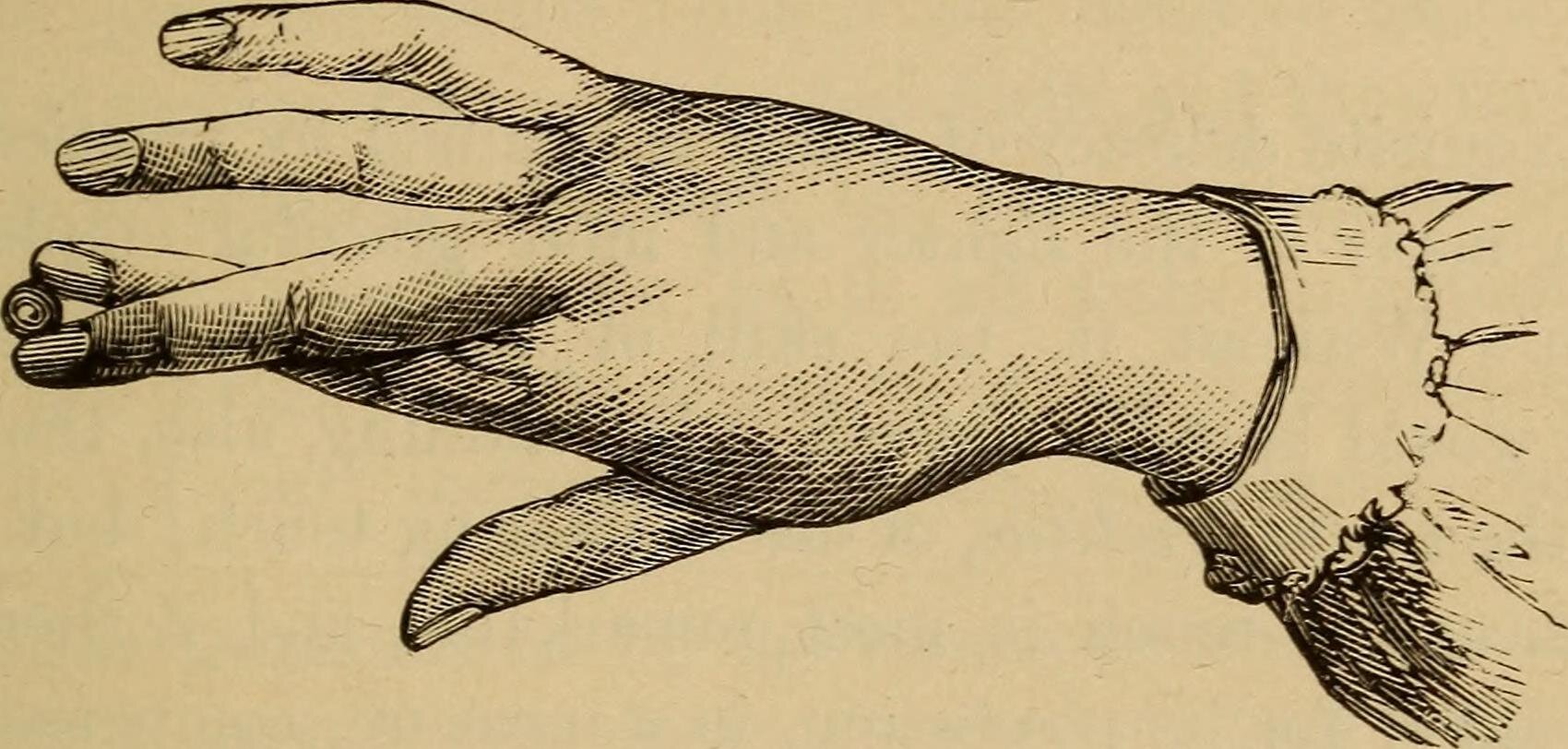
“It’s the usual problem of boundaries. When did you first masturbate? The first successful instance of autoerotic stimulation that put an end to frustrated fingering? An attempt at meaningful fingering?” asks the protagonist of the film “Jung & Wild” in her blog of the same name, in which she reflects on her erotic endeavors. Yes, how do we actually learn to give ourselves and others pleasure? Do we follow our intuitions, figure things out on our own through trial and error, or seek out helpful tips and tricks? With the advent of so-called sex technologies, new possibilities for enhancing our arousal skills are available…

Sexual moralism – Compulsory sex – Sex positivity – Sex negativity
I’d like to take a stand in favor of sex negativity. Why?
1) For all the wonderful things that the “sex-positive” label makes possible, it also presents some weaknesses, stumbling blocks, pitfalls, and misunderstandings. These go hand in hand with an uncritical understanding of sex-positivity, when a overly one-sided diagnosis of the problem is made: that sex is primarily suppressed and treated as a taboo.
2) I’d like to propose a very specific understanding of sex-negativity that cannot be confused with either a religiously conservative or politically right-wing hostility toward sex.
3) More broadly, I would like to move away from binary divisions and make it clear that sex negativity and sex positivity do not have to be two opposing forces, but rather could be seen as two progressive strategies—coming from opposite directions—that pull in the same direction, thereby jointly creating a huge…
Inspiring Restraint – Not Just in Japanese. Cultural-Historical Connections to Bondage
“[…] it matters what stories we tell in order to tell other stories; it matters what knots tie knots, what thoughts think thoughts, what ties tie ties.”
– Donna Haraway
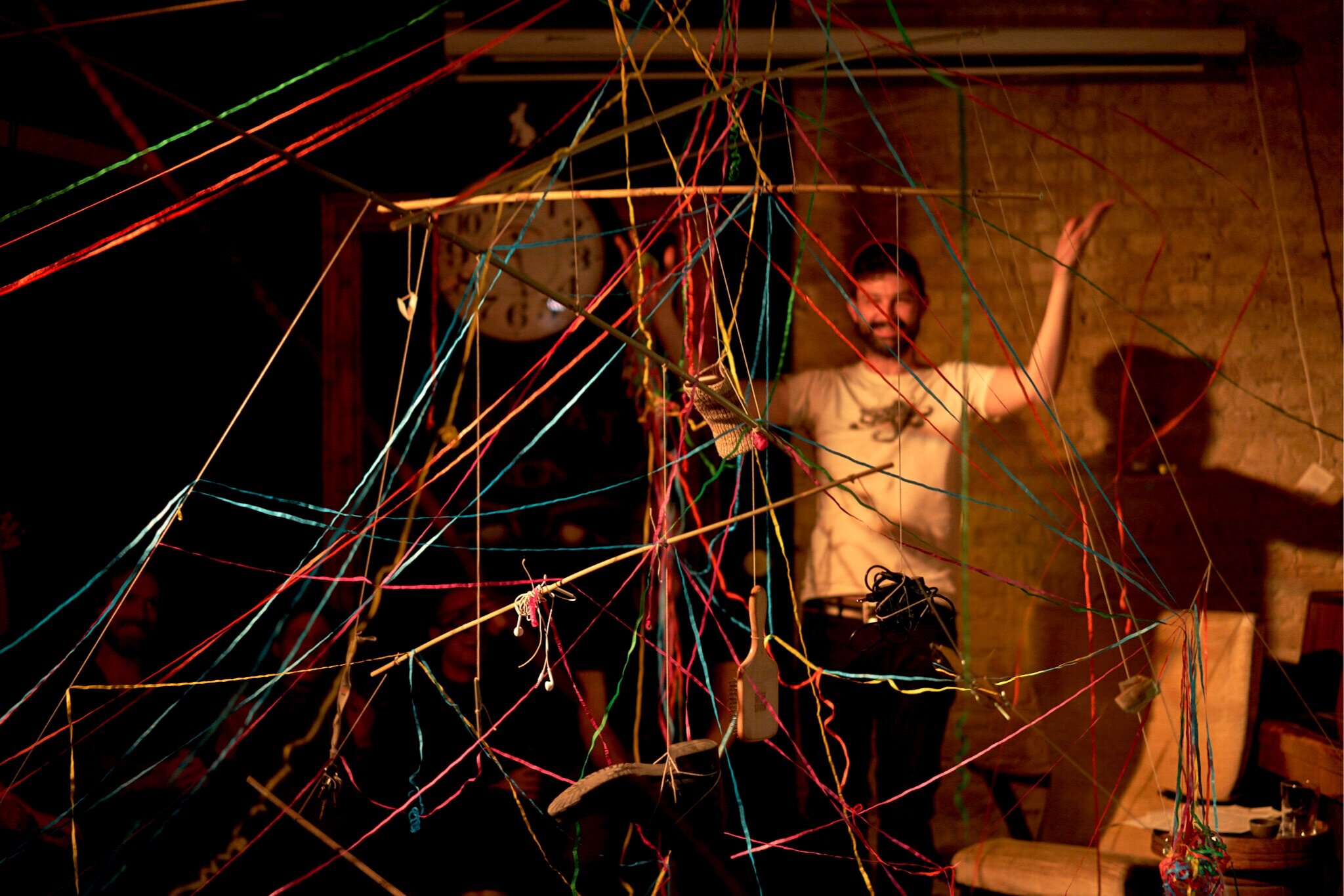
Anyone who has gotten a taste for bondage and wants to learn more about the techniques, schools, and origins of restraint practices—beyond improvised tying with a bathrobe belt—will sooner or later come across the Japanese arts of restraint known as shibari or kinbaku. The discussion then immediately turns to the Hojojutsu practices of the samurai, which date back to the Japanese Middle Ages and involved using rope restraints to subdue opponents. One learns that Shibari/Kinbaku developed almost organically out of Japanese everyday culture, which is entirely geared toward binding—after all, kimonos and gifts are also tied with a furoshiki. In his highly acclaimed book *The Beauty of Kinbaku*, Master “K” never tires of emphasizing how closely Shibari/Kinbaku is tied to Japanese…

Clauses. A Self-Reflection
The list of things we want to include as clauses in our workshop descriptions keeps growing and growing with each new workshop experience. For example, it used to feel like it was enough to simply write that “people of all genders and sexual orientations are welcome.” But it’s now clear: Simply mentioning that isn’t enough, of course. Because a diverse group brings its own potential for conflict, and while everyone is welcome, how do we address the specific challenges that arise? Can workshop facilitators talk about vulvas in a way that allows people without anatomical vulvas—but with energetic ones—to receive their vulva massages too? Who can do that? How? And how do group leaders navigate this, ensuring that a group handles it well when, for example, structurally marginalized people (e.g., people with bodies that fall on the spectrum of race, gender, age, and disability and thus have different conditions than those dictated by a socially conventional norm) are present—without triggering…
Beyond 'sex-positive' and 'sex-negative'
What’s your take on “sex positivity”? Just the term itself, for now!
When I first heard the term, I couldn’t wrap my head around the fact that such a sensual and dazzling realm was described with such a cold and mathematical expression—one whose sound reminded me of the phrasing of unpleasant medical diagnoses. Or I was reminded of the pejorative accusations of “positivism” I’m familiar with from scientific contexts—when the blind spots are pointed out that arise when, in exploring a topic, the approach is limited to a one-dimensional accumulation and piling up of facts, even though there’s also an abundance of knowledge that cannot be reduced to positive terms, that cannot be clearly answered with “yes” or “no.” In these initial associations with “positivity,” the term is not judgmental at first, but simply denotes a factual “something is there,” “something is above zero.” Of course, “sex positivity” does not merely want to emphasize that there is simply sex…
Deguiltification – An Experiential Essay by Chris Ifso
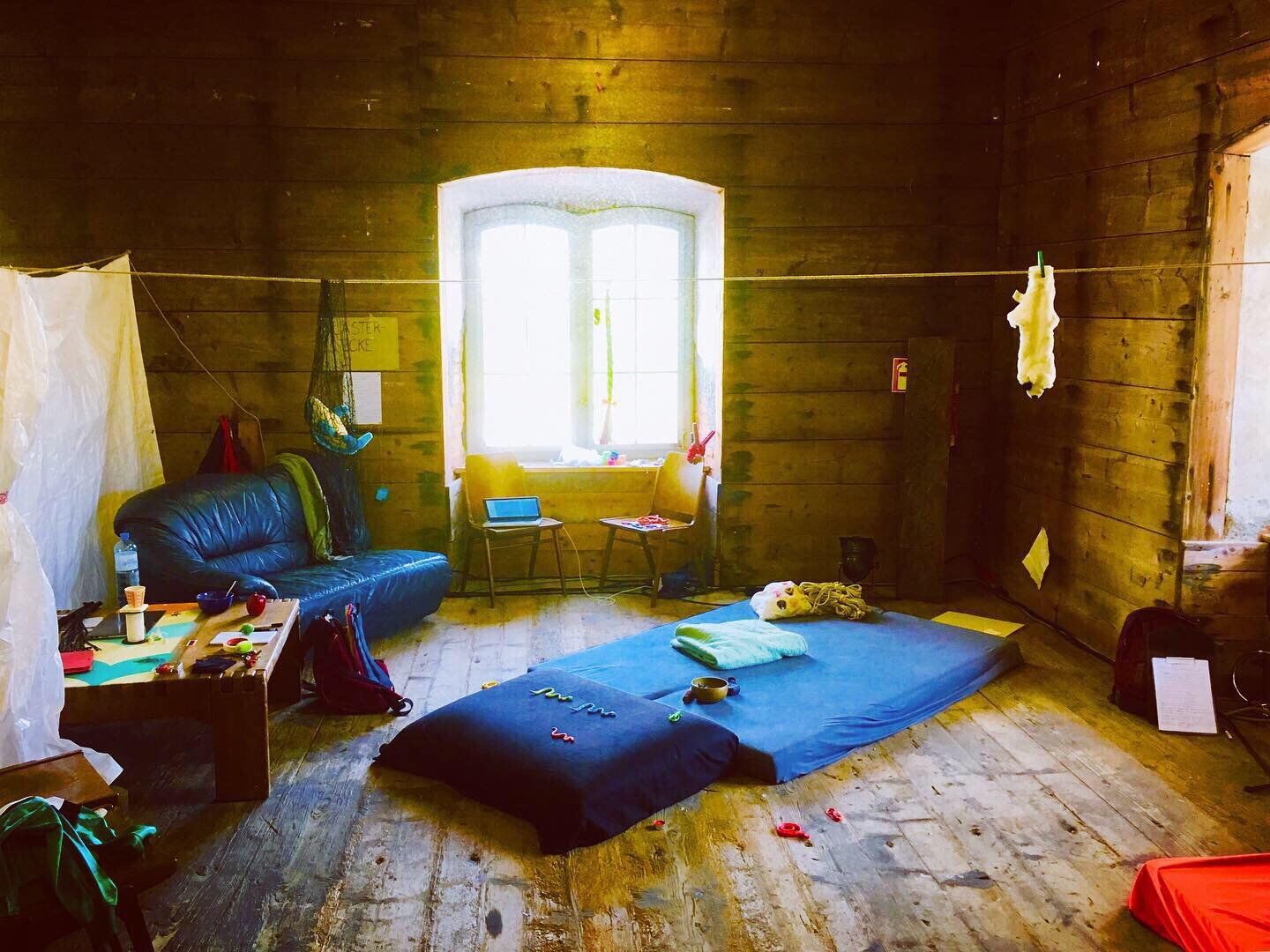
Beata and Matís run luhmen d’arc, a company founded in Berlin that creates “spaces dedicated to the manifold aspects of intimacy and desire.” In September 2019, the duo participated in Schmiede, a 10-day maker festival held at the Old Salt Works in Hallein, Austria, which brought together over 100 artists, musicians, digital creators, and writers—including me. Beata is also an academic; her PhD topic is The Art of Sex Education: Contemporary Aesthetics As Idiosyncratic Interventions in Hegemonic Sexual Discourses. As part of her research, luhmen d’arc was there to interview a range of participants about attitudes toward sexuality. Interviewees were also offered an introductory bodywork session. A mattress sits in one corner of this large barn-like wooden studio, behind a flimsy curtain hung on a rope between pillars. I take off my shoes, lie face down, and close my eyes. Beata and Matís proceed to give me a massage that is by turns tender, arousing, rough, funny, and relaxing. I am fully clothed and they are gentle, but crucially, there is no rule against getting turned on. To prove this, vibrators, rope, and masks are scattered around the space for those who wish to experiment further. I purr, laugh, wriggle, and groan as I’m cradled, gently pummelled, and stroked. I open my eyes; they turn on the tape recorder and ask me what the session brought up for me. There I am, a 63-year-old man, relaxed and glowing, lounging next to a young man and woman I like and trust, with whom there is absolutely no reason to feel inhibited. I am among friendly strangers…

Forensic Sexualities: Some Thoughts on Shame
Research question: To what extent is sexuality not simply a means of deriving or increasing pleasure, but rather a catalyst, a medium through which we process something that lies within our bodies? This question came to me after a conversation with friends about shame. The prevailing view is that shame is something bad that must be eliminated so that we can finally be free. Although I don’t think that’s entirely wrong, something inside me resists it. It seems too simplistic to me—and if it were that simple, why haven’t we gotten rid of shame long ago? It resists also because I’m afraid of the knee-jerk reaction of simply repressing shame and pretending not to feel it. And as we know, everything that’s repressed eventually comes back, finding its cracks and crevices to crawl back to the surface. It can’t simply be pushed aside; it has to be worked through. On top of that, I’m afraid that people might start feeling ashamed of feeling ashamed, or that it could lead to “shame-shaming.” Last but not least, there’s a whole bunch of very unpleasant people who behave shamelessly—and you’d wish their superego were stronger…

“Look What Marketing’s Done to My Body” – On the Pressure of (Not-So) Creative Self-Promotion
As much as I enjoy designing and leading workshops—and as much as it always feels like meaningful work—it’s inextricably linked to an activity I simply hate: marketing. Begging people—please, please—to recognize, despite the fierce competition, what great work you’re doing and to come—not just because it’s a job and you want to make a living from it, but also because it would be too sad if workshops had to be canceled due to low attendance. While I still enjoy writing announcement texts, the horror begins when I realize I’ve been crouched in front of Facebook for hours, like a hunter searching for one “Conscious and Sensuality” group after another, and working my butt off to post the event link with an inviting text everywhere interested people might find it—always with the nagging thought that some groups have become a limbo for precisely such posts…

An Eclectic Essay on (In)security (work in progress)
risk, safety, conflict, consent—what drives sex-positive communities usually has something to do with these key concepts. It’s complicated. Uncertainty isn’t bad in and of itself, and safety isn’t good in and of itself—and vice versa. From my personal experience, I’ve found spaces that strongly emphasize consent to be both empowering and enriching, as well as restrictive, school-like, or tamed—and therefore simply boring—or, in cases that are fundamentally ambivalent gray areas, failing to do justice to the situation. Sometimes these spaces led to frustration when the very people to whom I could fully open up because of their trusting nature would always back down in the name of safety just as things were getting interesting, so as not to cross “my” boundaries…

Von Wellness und Exorzismus. Ein Versuch über die Frage, was eine Session wertvoll macht
It’s always a balancing act: the whole issue of sitting in a circle in workshop settings. It’s unbearably pedagogical when everyone has to take turns, like chickens on a perch, laying an egg and saying something (Footnote: and, interestingly, how often people end up talking about their own tiredness or alertness). On the other hand, it’s also wonderfully democratic when everyone is given space to speak and listen, without shyness or overconfidence determining who gets to speak. And then there’s the admittedly powerful symbolism of the circle, which in séances even makes tables move as if by magic…
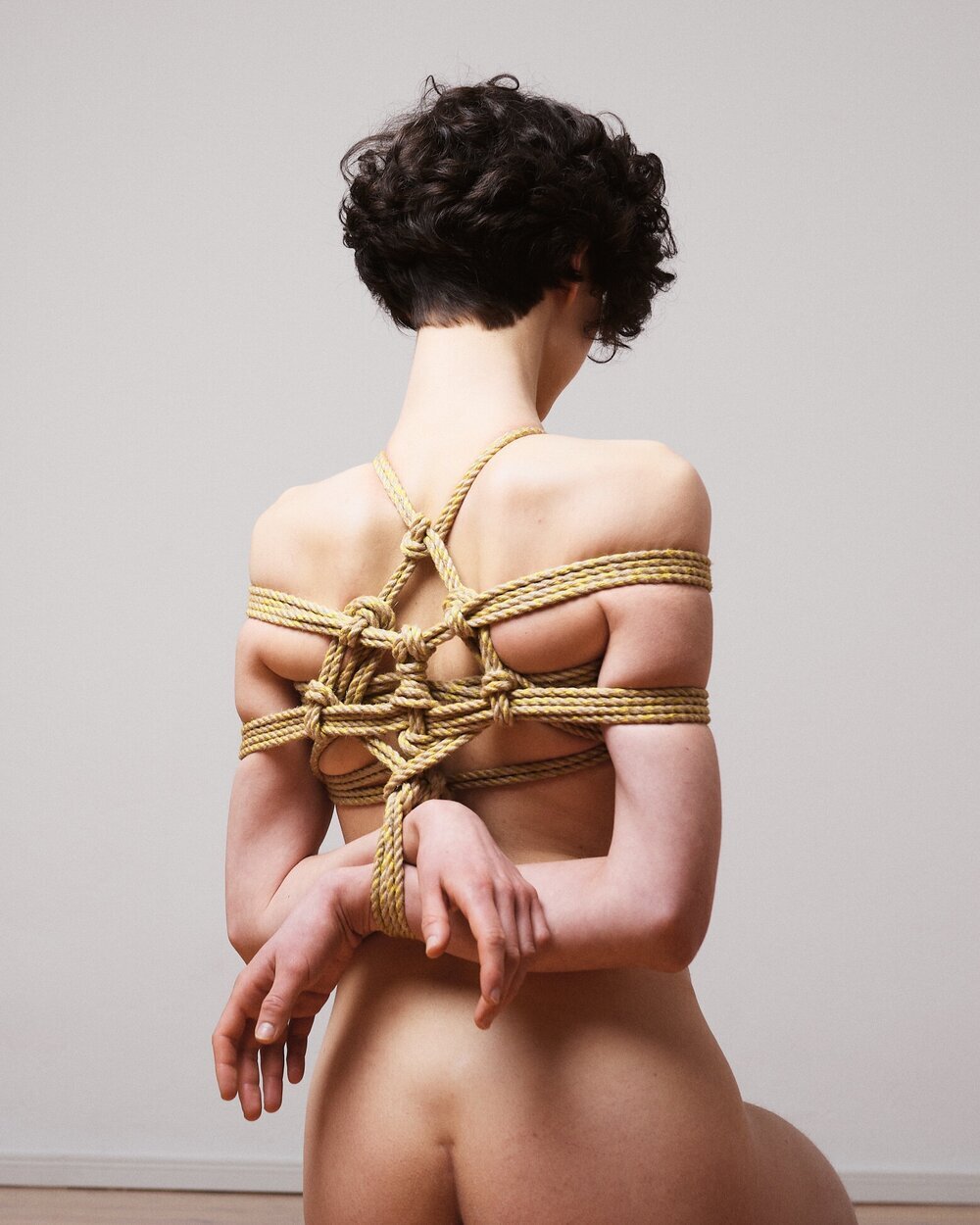
The Ropes That Mean the World. Reflections on the EURIX – Rope Artist International Performances, Spring 2019
The most recent EURIX—an event dedicated to bondage, shibari, and kinbaku—presented its third edition of the “‘Rope Artists International’ Rope Bondage Performance Festival,” which aims to bring the performative aspects of rope bondage to the stage. “For this edition, we paired rope performers with experts in the field of professional performance and invited them to explore the intersection between art and kink,” explains the event description, adding: “Since EURIX focuses on creativity and innovation and brings together the most skilled riggers and models, the performance program showcases not only high-level technical skills but also presents the latest developments in aesthetics and theater…”

“Always this disgusting sex.” On reading the reviews of Jan Bonny’s *Winter Fairy Tale*
The arts reviews give the impression that emphasizing one’s own outrage and revulsion is a necessary conclusion that viewers must draw whenever sex and terrorist violence are presented together. And this is despite the fact that, if you look closely, the portrayal of sex in *Wintermärchen* functions differently from the callous, hardcore sex scenes in other neo-Nazi films. In contrast, the explicit scenes in Jan Bonny’s film look surprisingly “normal.” Normal = no steel-hard bodies, the fumbling seems clumsy (“ow!”), there is insecurity, jealousy, envy; it seems bored, then, to spice things up, they…

A mixed bag, please! Definitional difficulties
Difficulties in understanding. When, in a friendly gathering, people are recounting their wildest romantic escapades and then the extra detail slips out: “…and then we also had sex.” Yikes! And what were all those other things you did together? Actually, it’s a classic question: where does sexuality begin and where does it end? Generally speaking, the term refers exclusively to the act of penetration. This is particularly surprising when the people in the conversation are individuals who otherwise celebrate sexuality in all its diversity and engage in various experiments, techniques, games, and desires that go beyond the heteronormative framework…
INDEX
- April 2025
-
February 2025
- Feb. 10, 2025 On the "Tradition" of Tantra Massage (OR Eva Says It Best) Feb. 10, 2025
-
October 2024
- Oct. 24, 2024 My First Time Oct. 24, 2024
- Oct. 21, 2024 I'm Sorry About the Sex Oct. 21, 2024
-
August 2023
- Aug. 22, 2023 Devouring, Digestion, and Kokoreç Aug. 22, 2023
-
July 2023
- July 3, 2023 "I do wonder: Why do I make people up?" July 3, 2023
-
April 2023
- April 22, 2023 Workshop on Sexuality. Part I April 22, 2023
- April 21, 2023 Workshop on Sexuality. Part II April 21, 2023
- April 20, 2023 Workshop on Sexuality. Part III April 20, 2023
- April 19, 2023 Workshop on Sexuality. Part IV April 19, 2023
-
August 2022
- Aug. 23, 2022 Tantric Massage: Decluttering, Recluttering & Beyond – A TWAPOS Experience Aug. 23, 2022
-
July 2022
- July 30, 2022 Salt With a Pinch of Tantra July 30, 2022
- July 21, 2022 On Being Unenthusiastic About Enthusiastic Consent – New Zine by Beate Absalon July 21, 2022
-
January 2022
- Jan. 11, 2022 Calling a Sex-Positive Community, Group, or Event a “Family”—and Why It’s a Red Flag—New Zine by Beata Jan. 11, 2022
-
December 2021
- Dec. 1, 2021 But I'm a Creep. A lab report. Dec. 1, 2021
- October 2021
- September 2021
-
April 2021
- April 10, 2021 Cookie Consent April 10, 2021
-
January 2021
- Jan. 2, 2021 Self-Help Zine for the Time AFTER an Exciting Workshop Jan. 2, 2021
-
December 2020
- Dec. 31, 2020 Intimate Interviews Part II Dec. 31, 2020
- Dec. 22, 2020 Goethe-Institut China video interview with Beata on “Pornography & Society” Dec. 22, 2020
-
November 2020
- Nov. 11, 2020 The Inner Playground. An Audio Journey by Tim Holland Nov. 11, 2020
-
October 2020
- Oct. 29, 2020 Daniela Reina Téllez on the Power of Workshops and Circles Oct. 29, 2020
- Oct. 20, 2020 Sex /vs./&/?/ Violence. An Attempt at Conceptual Delimitation through Demarcation Oct. 20, 2020
-
September 2020
- Sept. 18, 2020 Testimonial for our “Trial & Eros” workshop by Claire Sept. 18, 2020
-
August 2020
- Aug. 6, 2020 “Sex & Food” – Beata in a podcast conversation with Nicole Siller Aug. 6, 2020
-
June 2020
- June 23, 2020 Intimate Interviews Part I – The Connection Between Art and Pleasure and a Workshop Request Show June 23, 2020
- June 15, 2020 Lonely Surfaces – Sexual Enhancement on a Touchscreen June 15, 2020
-
May 2020
- May 3, 2020 Sexual Moralism – Compulsory Sex – Sex Positivity – Sex Negativity May 3, 2020
-
March 2020
- March 18, 2020 Inspiring Restraint—Not Just in Japanese. Cultural-Historical Connections to Bondage March 18, 2020
-
February 2020
- Feb. 24, 2020 Clauses: A Self-Reflection Feb. 24, 2020
-
January 2020
- Jan. 15, 2020 Beyond “sex-positive” and “sex-negative” Jan. 15, 2020
-
November 2019
- Nov. 27, 2019 Deguiltification – An Experiential Essay by Chris Ifso Nov. 27, 2019
- Nov. 10, 2019 Forensic Sexualities: Some Thoughts on Shame Nov. 10, 2019
-
September 2019
- Sept. 25, 2019 “Look What Marketing’s Done to My Body”—On the Pressure of (Not-So) Creative Self-Promotion Sept. 25, 2019
-
July 2019
- July 9, 2019 An Eclectic Essay on (In)security (work in progress) July 9, 2019
-
June 2019
- June 24, 2019 On Wellness and Exorcism: An Essay on What Makes a Session Valuable June 24, 2019
-
April 2019
- April 28, 2019 The Ropes That Mean The World. Reflections on the EURIX – Rope Artist International Performances, Spring 2019 April 28, 2019
- April 6, 2019 “Always this gross sex.” On reading the reviews of Jan Bonny’s *Wintermärchen* April 6, 2019
-
March 2019
- March 27, 2019 A mixed bag, please! Difficulties with definitions March 27, 2019
- March 20, 2019 Dealing with the Unconventional: Reflections After a Workshop March 20, 2019
-
July 2018
- July 10, 2018 Some Thoughts on the Empowering Sensual Objectifications in Contact Improvisation July 10, 2018
TAG CLOUD
- An Orgy
- Anna Mense
- Type
- Audio
- BDSM
- Beata
- Beata
- Beate Absalon
- Bondage
- Brainstorming
- CI
- cluttering
- Consent
- Creepiness
- Critical Sexpositivity
- criticism
- Cultural Theory
- decluttering
- Definition
- Deguiltification
- Empowerment
- Enhancement
- Enthusiastic Consent
- Expectations
- Felix Ruckert
- Female Pleasure
- Feminism
- Shackles
- Arts & Culture
- Fluent
- FOMO
- freedom
- FRIES
- Goethe-Institut China
- gotta fuck
- Borders
- Growing Old
- History
- Timber Market
- humor
- Independence
- Interview
- Intimacy
- Kinbaku
- Consensus
- Criticism
- Cultural History
- Art
- Body
- Nouns of the body
- Luhmen d'Arc
- Luhmen d'Arc Studio
- luhmendarc
- Desire
- Martha Nussbaum
- matis
- Matís d'Arc
- MyGiulia
- newage
- Not giving a damn
- Orgy
- Podcast
- Positivity Terror
- Prude-Shaming
- Queer Contact Improvisation
- Rape Play
- Rebecca
- Reflection
- Rules
- retreat
- Review
- Risk-Aware Space
- Rules
- Safe(r) Space
- Shame
- Self-Help
- Session
- Sex
- Sex Technologies
- Sex-negative
- Sex-Positive
- Sexuality
- Sexuality
- Shame
- Shibari
- Security
- Solidarity
- Spain
- tantra
- tantric massage
- tantra-with-a-pinch-of-salt
- Testimonial
- Touch & Play
- Lack of enthusiasm
- Uncertainty
- Devour
- When
- Workshop
- Workshop on Sexuality
- Zine